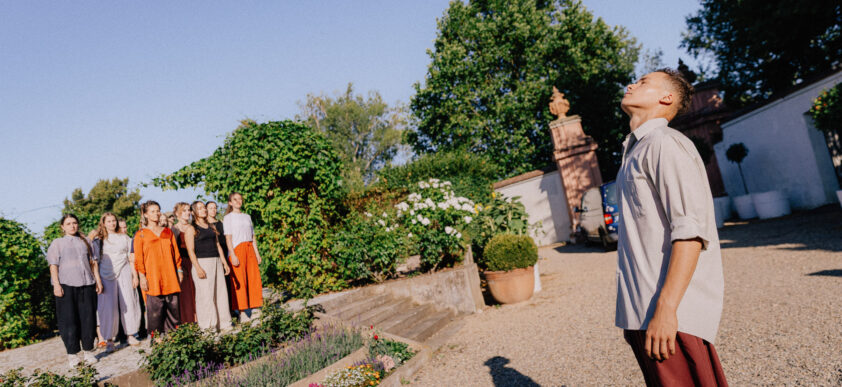
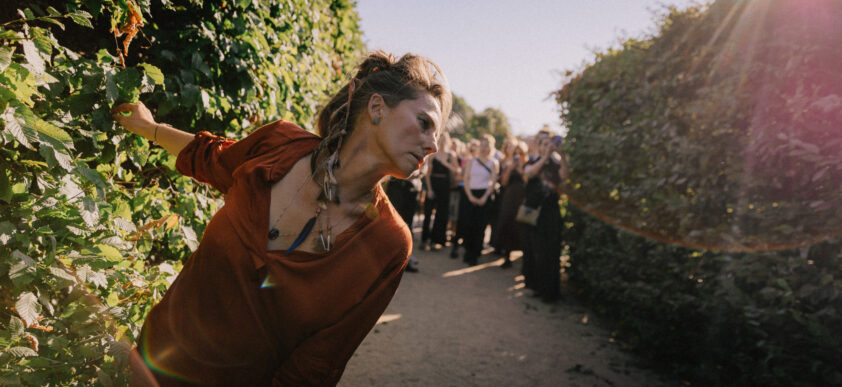
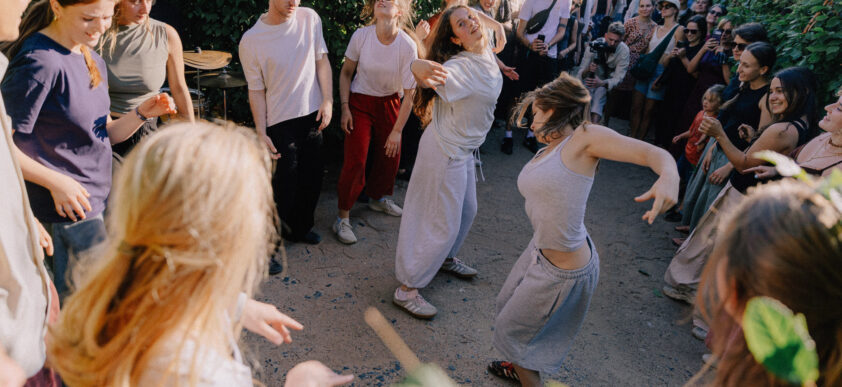
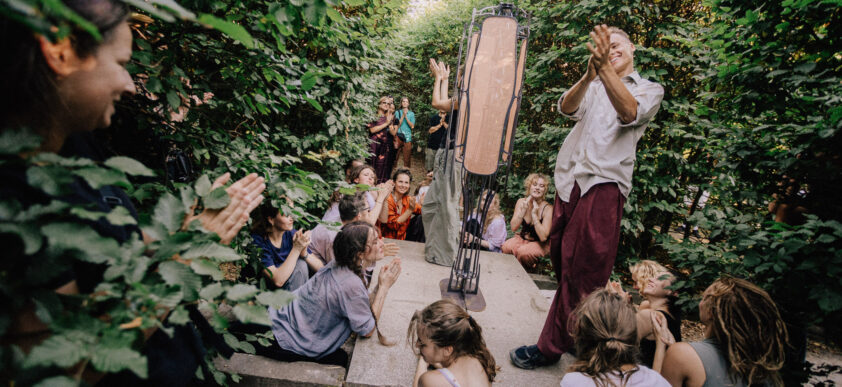
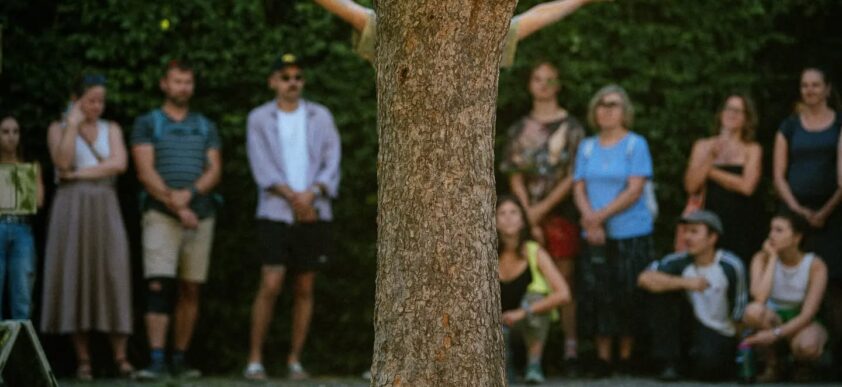
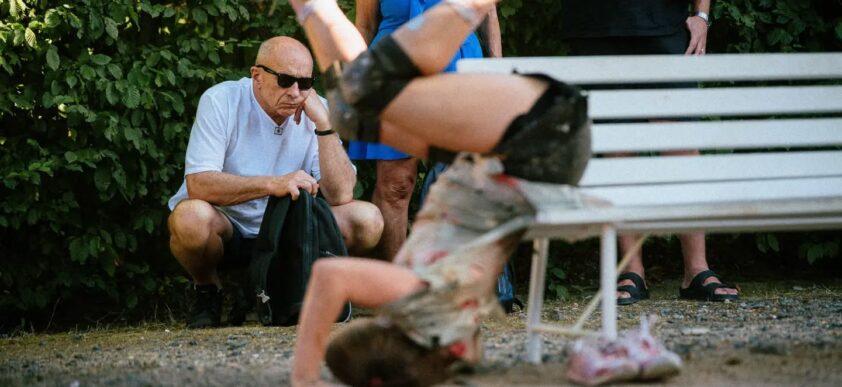
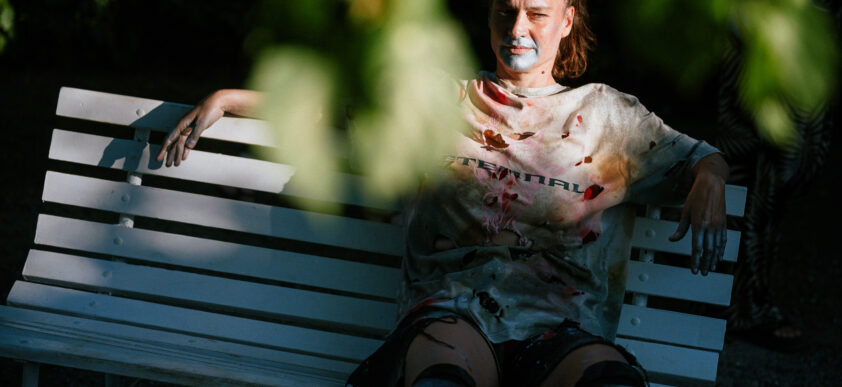
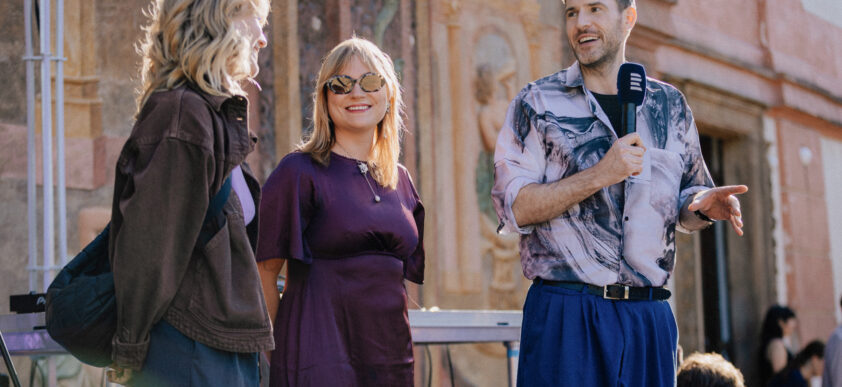
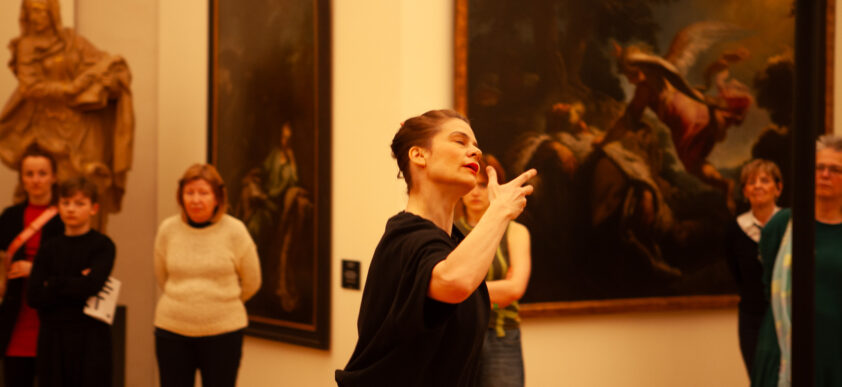
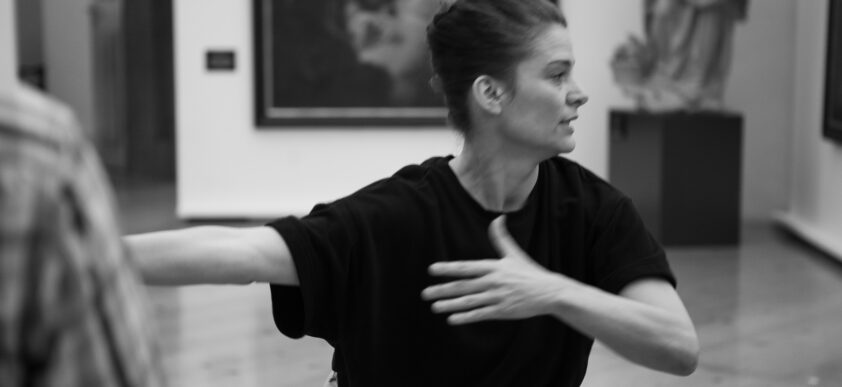
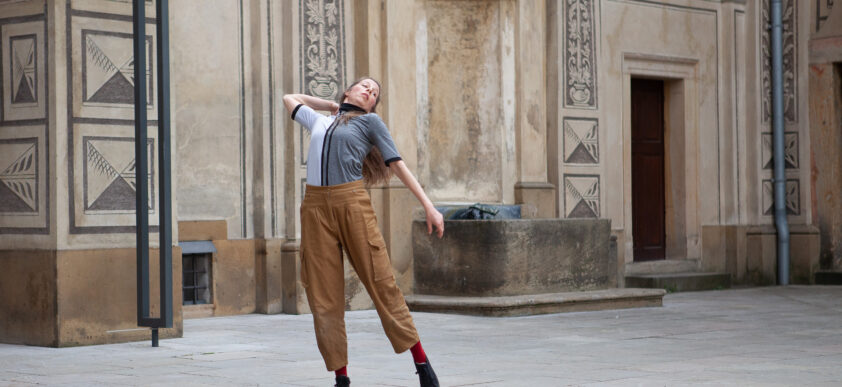
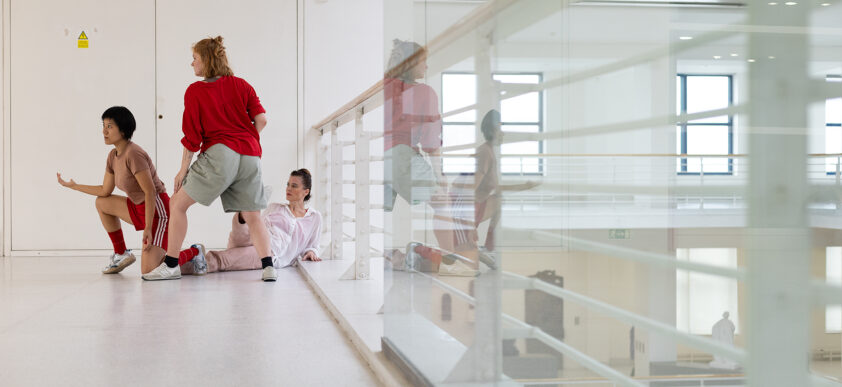
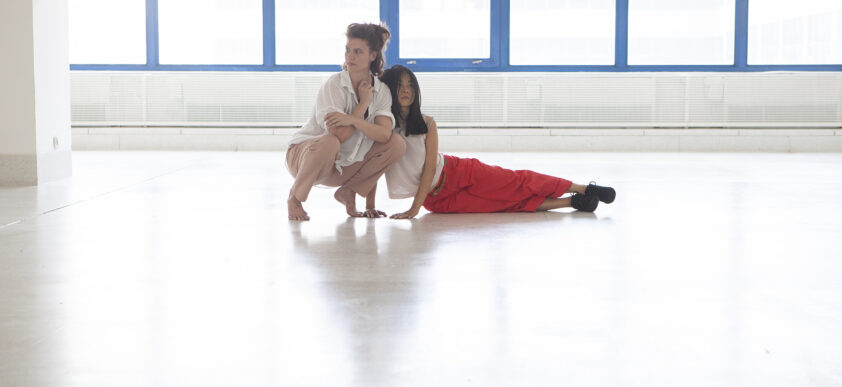
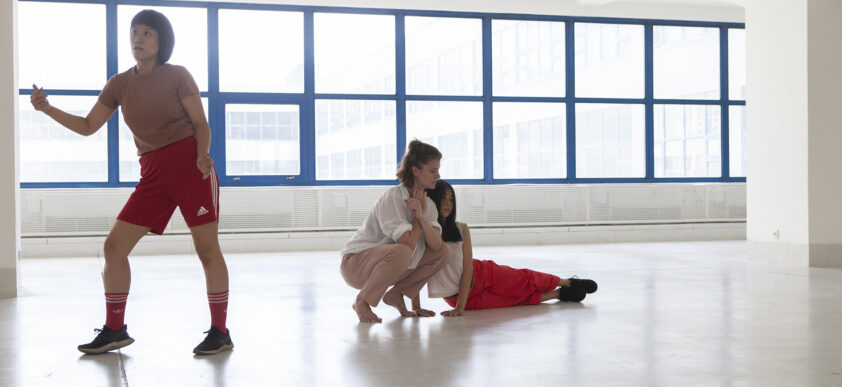
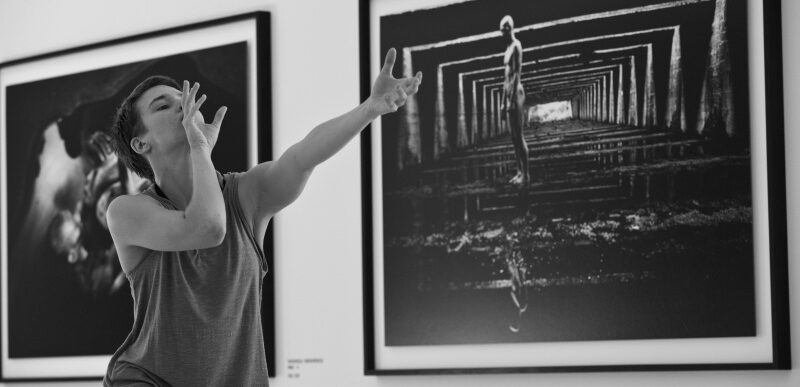
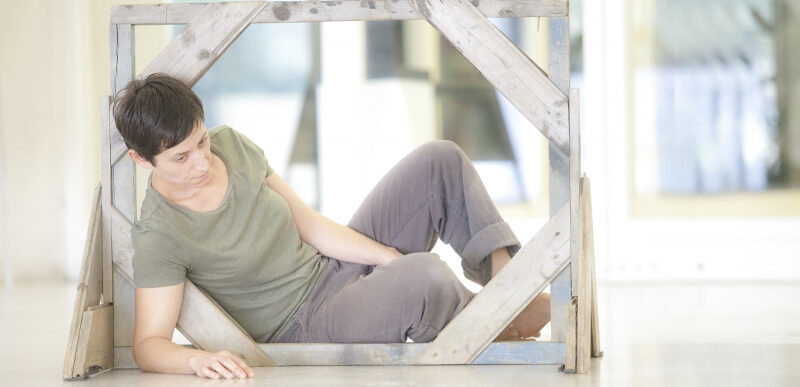
Hana Polanská & Jakub Choma: Circle With Many Centers | Photo: Jan Hromádko

Dance in the Gallery: Labyrinth

A Choreographic-Sculptural Triptych

EVENT OVER
Troja Chateau Gardens | GHMP
Tue 28 Jul | Tue 11 Aug | Tue 25 Aug | Fri 19 Sep | Mon 28 Sep

This year, Dance in the Gallery unfolds in the labyrinth of Troja. Hana Polanská, Viktor Černický and Kristián Mensa now enter a creative process with sculptors and the curatorial team of the Prague City Gallery (GHMP). Together they create a new performative work on the border of dance and visual art, made specifically for the baroque garden of the Troja Chateau.

All events

In the labyrinth, the individual creative approaches meet, pass one another and come together again – always transforming. This year’s Dance in the Gallery is created in co-production with the Prague City Gallery, in connection with the exhibition project Labyrinth: Wandering Within at the Troja Chateau.

Dance in the Gallery: Labyrinth is not an accompanying programme to the exhibition. It is a new original work created in co-production by SE.S.TA – Centre for Choreographic Development & the Prague City Gallery, with respect for the dramaturgy and curatorial vision of the Art for the City team.

Unveiling the individual parts | Riviéra festival

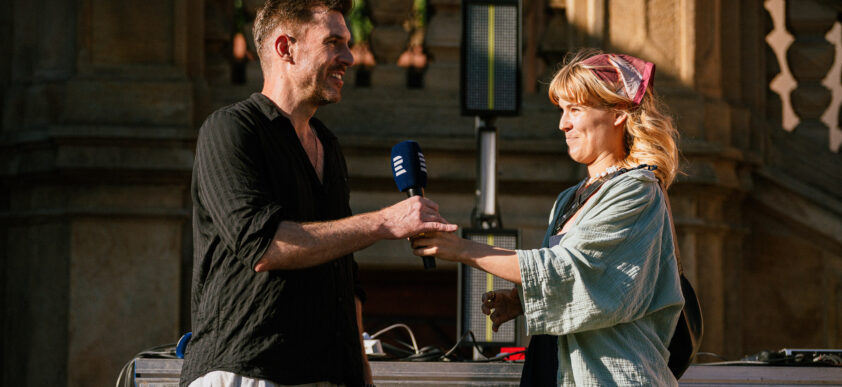
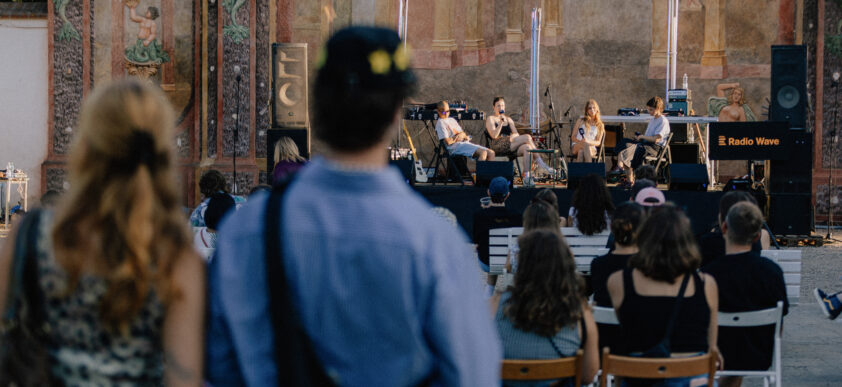
On summer Tuesdays the individual parts of the triptych are presented in the gardens. Each brings a new sculptural installation to life, or unveils it performatively, and forms part of the Riviéra evening programme prepared by Radio Wave with the Prague City Gallery. Riviéra runs from 5.30 p.m. to 10 p.m.

  • Tue 28 Jul | 6 p.m. – Kristián Mensa & Stanislav Zábrodský: Ungrounded. Preceded by Kristián Mensa’s workshop On the Way to the Freedom of the Body
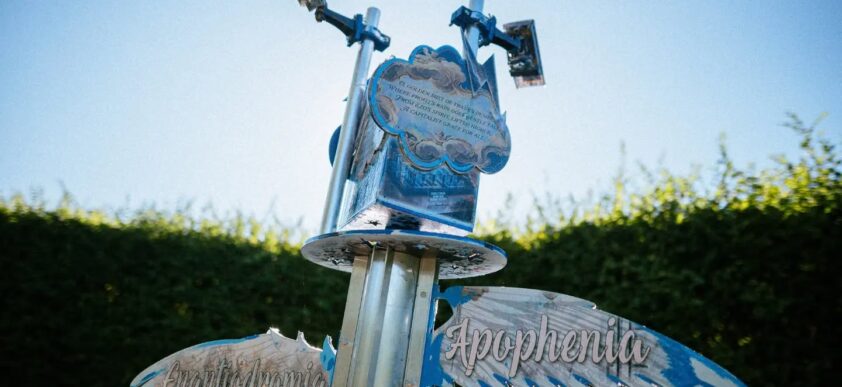
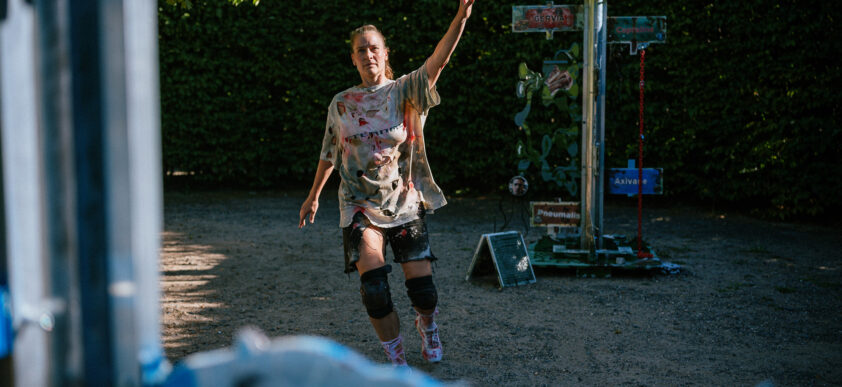
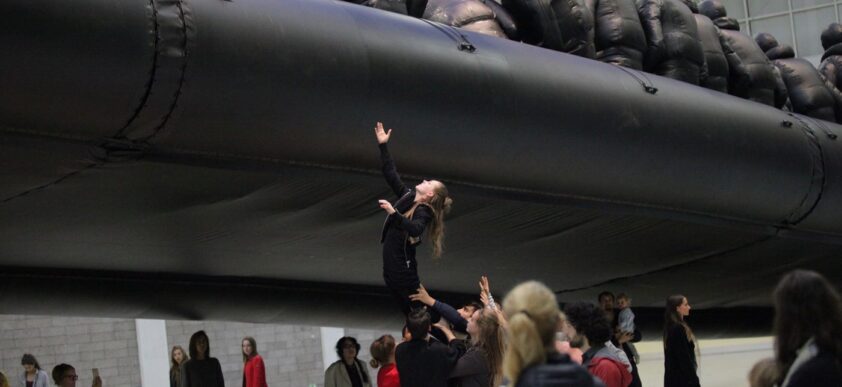
  • Tue 11 Aug | 6 p.m. – Hana Polanská & Jakub Choma: Circle With Many Centers
  • Tue 25 Aug | 6 p.m. – Viktor Černický & Tomáš Roubal: Claude

Premieres | Art Book Fair and Poznej Vltavu

In the autumn the individual parts come together in a joint presentation as a single performative and visual whole.

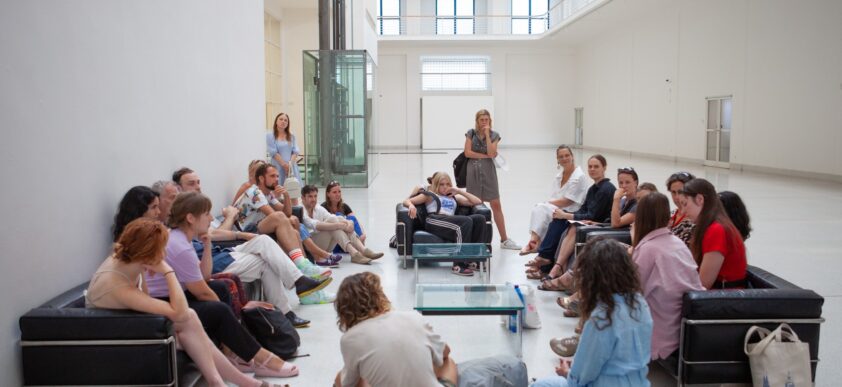
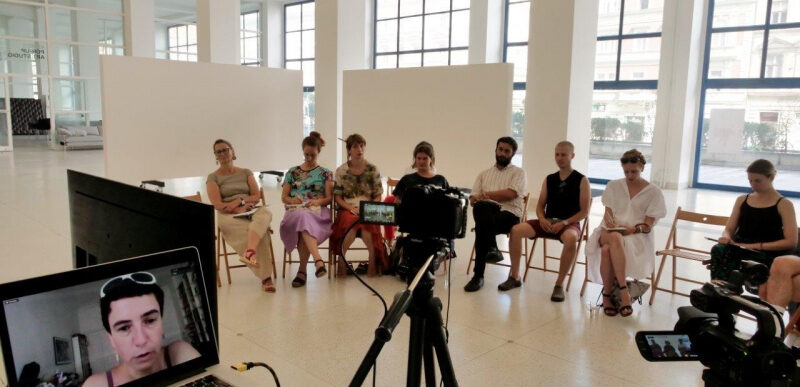
  • Fri 19 Sep | 5 p.m. – Diptych: Kristián Mensa & Stanislav Zábrodský, Hana Polanská & Jakub Choma. With a discussion moderated by Hana Polanská. Part of the Art Book Fair
  • Mon 28 Sep | 4 p.m. – Triptych: the first presentation of all three parts together. With a workshop by Viktor Černický. Part of the Poznej Vltavu festival

The three parts of the triptych

I. Kristián Mensa & Stanislav Zábrodský: Ungrounded

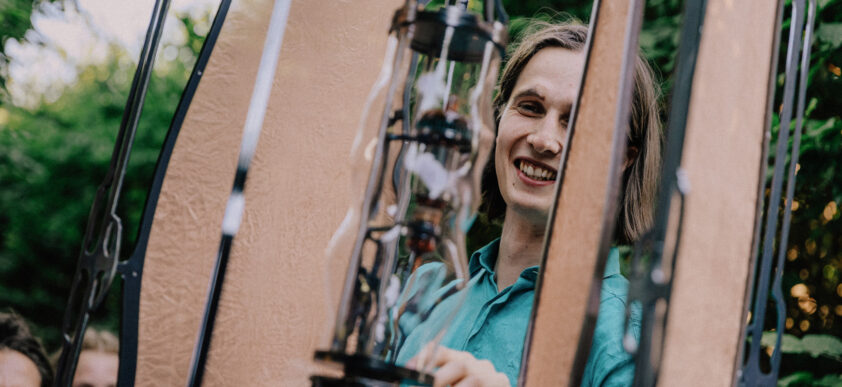
Stanislav Zábrodský’s sculpture stands in the labyrinth like an aerial from early industrial times, regenerating their technical aesthetic and formal language. Kristián Mensa explores it through the physicality of breaking and, together with a dozen hip-hop dancers, turns the encounter with this “totem of lost function” into a ritual of contact.

“The performance was inspired by the mystery of the object and its lost function, and by the tangled path towards finding it. We were led to the object by live music, which worked as an aerial and drew us closer. On reaching it, the object became a totem that transmits and absorbs energy.” – Kristián Mensa

II. Hana Polanská & Jakub Choma: Circle With Many Centers

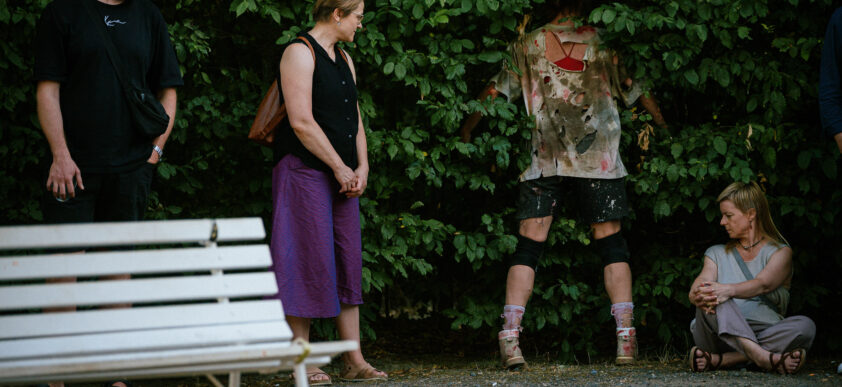
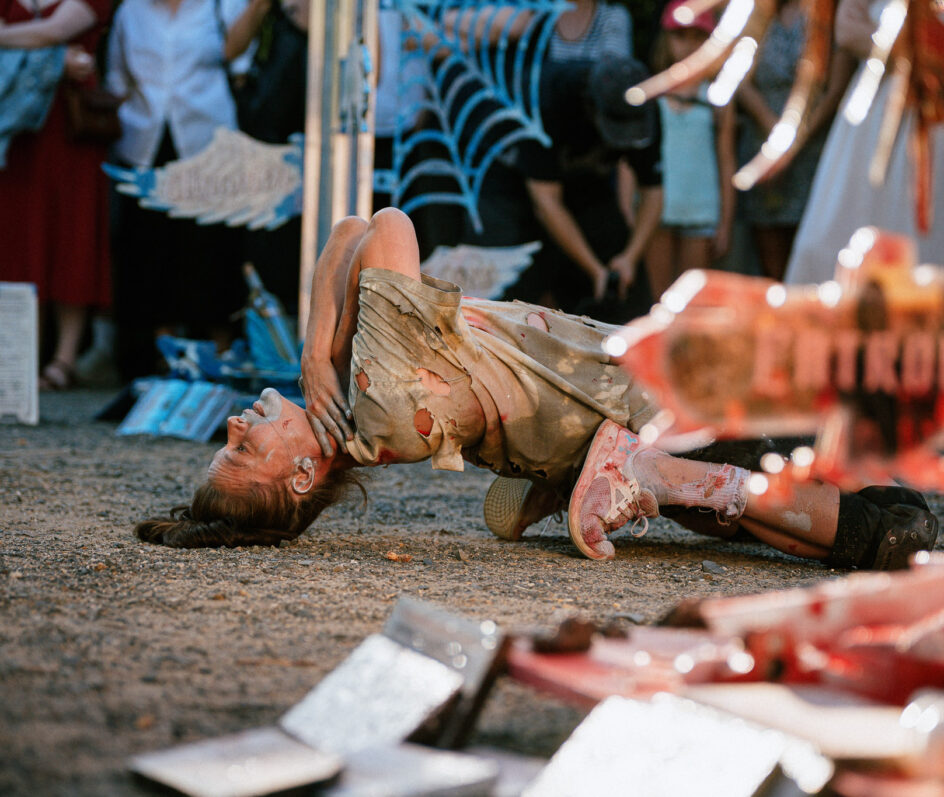
The performance by Hana Polanská and Jakub Choma enters the labyrinth as a hypertextual space in which Choma’s meta-hybrid works – their material diversity called into question – connect with history as well as with contemporary technological and capitalist structures. The vertical, disciplined and representative body, bound up with courtly power, control and the Western ideal of the human being, gradually disintegrates into stooped and exhausted figures, absurd repetitions, ordinary gesture and everyday corporeality.

Out of these broken and stuttering codes, the body of a game NPC (non-player character) finally emerges – a figure subordinated to the system of the game, caught in a loop and an error glitch. A landscape of signs and uncertain events gathers at the centre of the labyrinth by the sculpture, where their temporary, unstable connection is played out. The centre here is radial: a circle with many centres, in which the experience of a centre is in doubt.

III. Viktor Černický & Tomáš Roubal: Claude

The choreographer Viktor Černický enters into dialogue with the sculptor Tomáš Roubal along the axis of body and space. Although the sculpture appears to be indifferent, immobile material, it becomes a medium holding the spatial record of dozens of hours of repetitive, subtly varied sculptural gestures. On the other side stands the dancer as an echo, or rather as a second voice: both the numerator and the denominator of space. The choreography takes the form of a sculpture in space and time that weighs nothing and whose resting place we cannot name. Its form is redefined in relation to space, yet we can perceive it only in time – movement after movement, layer after layer.

Practical information

  • Free admission
  • Troja Chateau Gardens, U Trojského zámku 1/4, Prague 7
  • By bus from Nádraží Holešovice (metro C) to the Zoologická zahrada stop; the chateau is on the opposite side of the road
  • Barrier-free access: the ground floor of the chateau only; the gardens are accessible
  • The programme takes place outdoors; in case of bad weather please follow the GHMP news page

Labyrinth: Ungrounded & Circle With Many Centers

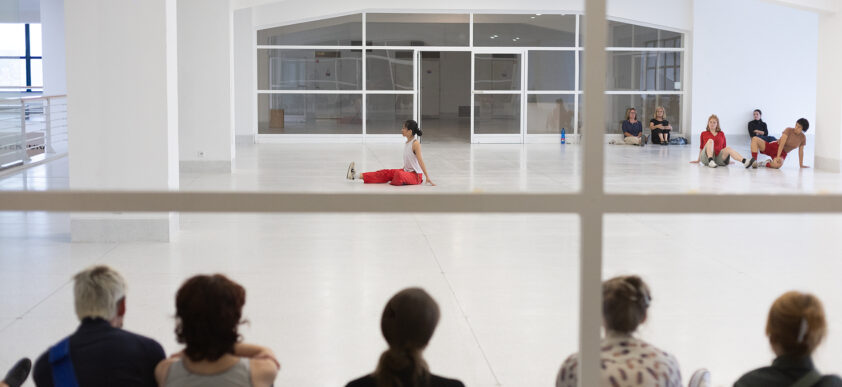
Kristián Mensa's workshop On the Way to the Freedom of the Body
Kristián Mensa & Stanislav Zábrodský: Ungrounded | Photo: Jakub Červenka
Hana Polanská & Jakub Choma: Circle With Many Centers | Photo: Jan Hromádko
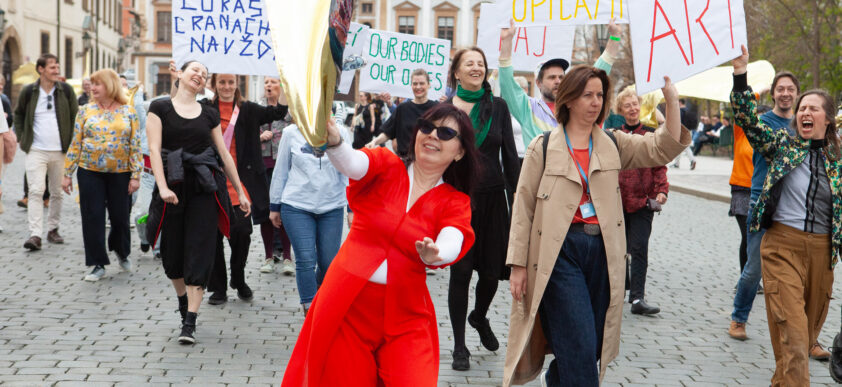
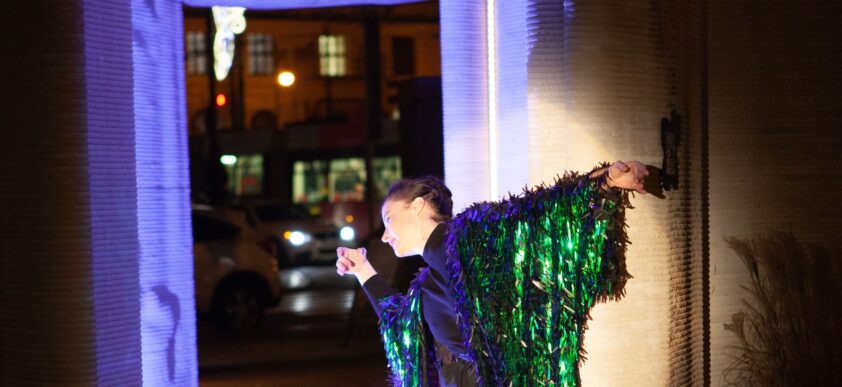
The opening of Riviéra – Rebeka Provazníková and Martin Maryška | Photo: Jan Hromádko
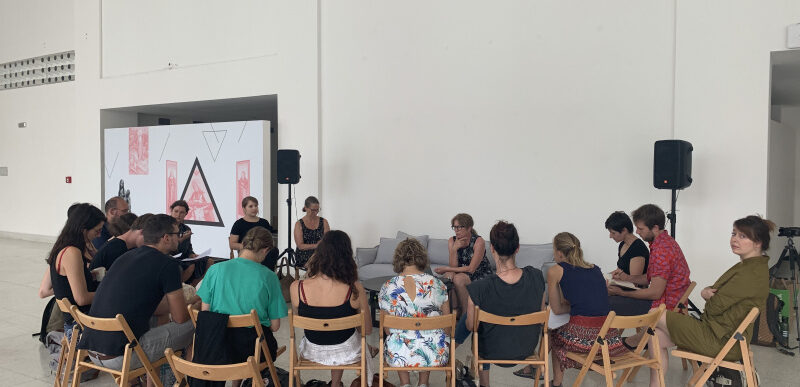
The dramaturgical and curatorial team | Photo: Jakub Červenka
Tereza Havlínková of Radio Wave moderating the discussion | Photo: Jakub Červenka
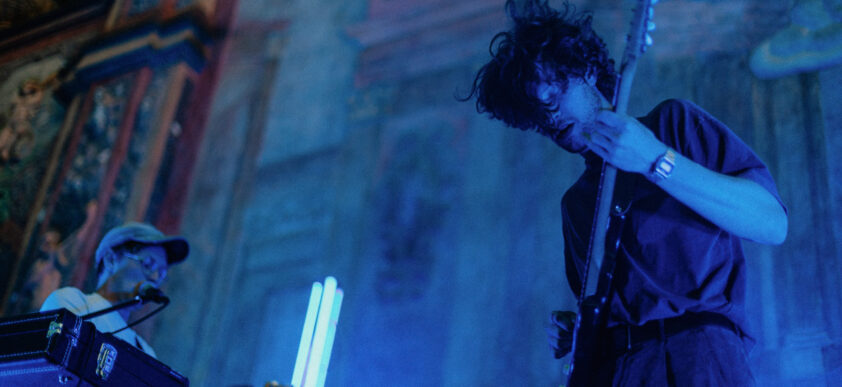
From the Riviéra music programme | Photo: Jakub Červenka

Kristián Mensa, dancer and visual artist known as “Mr. Kriss”, brings breaking, contemporary movement and visual art together organically in his work.

Hana Polanská, a former soloist of the National Theatre Ballet, focuses in her artistic, journalistic and scholarly practice on giving art back a voice that moves society.

Viktor Černický works on the border of dance, physical theatre, circus and visual art. He explores dance as a relationship and a living dialogue between body, space and audience.

Stanislav Zábrodský uncovers in his work the ways in which time and materiality reveal themselves in an era fundamentally marked by human activity.

Jakub Choma works in the volatile friction between digital fluidity and material density, examining the uncertain standing of human agency in a landscape of total technological mediation.

Tomáš Roubal works in sculpture, painting and drawing. His works respond critically to current social problems and political events. His hand is visually legible, simple, almost drawn; recently he has worked mainly with metal.

Credits

Labyrinth I: Ungrounded

Choreography: Kristián Mensa
Sculpture: Stanislav Zábrodský
Performed by: Kristián Mensa & participants of the workshop On the Way to the Freedom of the Body
Music: Ian Mykiska & Marek Urban
Video & editing: Adrián Vaco

Labyrinth II: Circle With Many Centers

Choreography: Hana Polanská
Sculpture: Jakub Choma
Performed by: Hana Polanská, Magdaléna Fedorková, Benjamin Šťastný, Tereza Lišková
Sound design: Petr Soukup
Video & editing: David Březina, Martin Říčan

Labyrinth III: Claude

Choreography: Viktor Černický
Sculpture: Tomáš Roubal

Curatorial and production team

Dramaturgical and curatorial collaboration: Martin Maryška (SE.S.TA), Agáta Young Hošnová (GHMP), Rebeka Provazníková (GHMP)
Production: Lola Madyarova (SE.S.TA)

Photo: Jakub Červenka, Jan Hromádko
PR: Martin Říčan (SE.S.TA), Petra Čížková, Tereza Revúcká (GHMP)
Video: Adrián Vaco, David Březina, Martin Říčan
Art Book Fair (GHMP): Lucie Skopcová
Riviéra (Radio Wave): Pavlína Poloprutská, Filip Černý

The Riviéra festival is prepared by Radio Wave – Czech Radio in collaboration with the Prague City Gallery. The accompanying discussions are moderated by Tereza Havlínková.
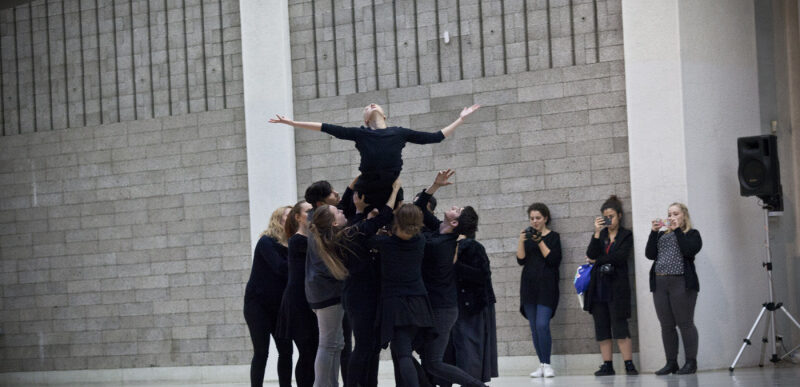
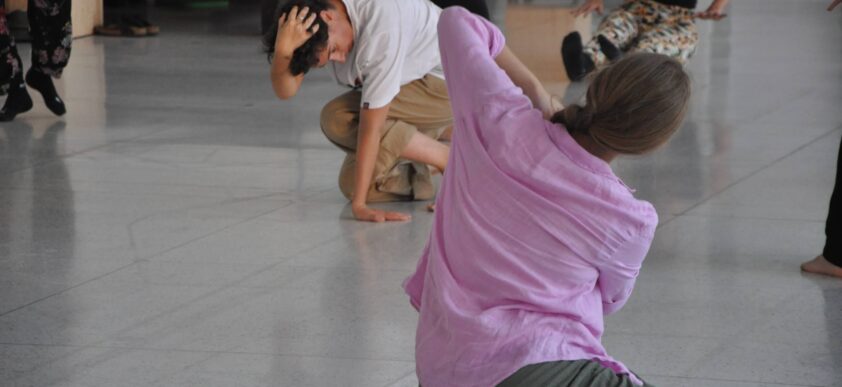
Dance in the Gallery 2012–2025 | Photo: Dragan Dragin, Julie Stehnová

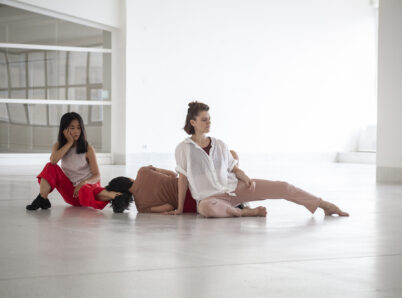
Alice Chauchat: Museography Choreography, Hana Polanská, Nhung Dang (foto Dragan Dragin)

Co-production Partner and Further Support

The project is created in co-production with the Prague City Gallery (Art for the City) in partnership with Radio Wave. It is financially supported by the Ministry of Culture of the Czech Republic, the City of Prague and State Cultural Fund.
Latest Editions of Dance in the Gallery

Dance in the Gallery: Horizons of Interdisciplinarity

This year's choreographic-visual collaboration is part of SE.S.TA's long-term cycle, which since 2012 has connected contemporary dance and visual art in the gallery context and in public space. We aim to develop interdisciplinary collaboration between choreographers and visual artists and to deepen the sharing of know-how across the individual art forms.

Collaboration across galleries and museums

The pilot Dance in the Gallery project began in 2012 in collaboration with the National Gallery Prague and the Wannieck Gallery in Brno. In 2016, the Prague City Gallery and the Museum of New Generation in Žďár nad Sázavou joined.

With GHMP at the Prague Quadrennial

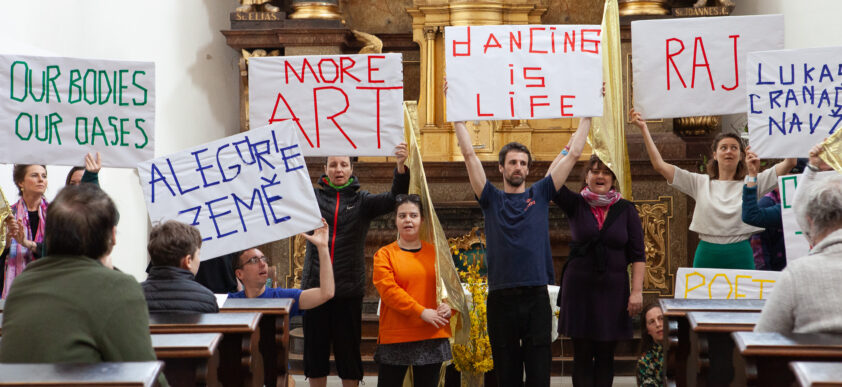
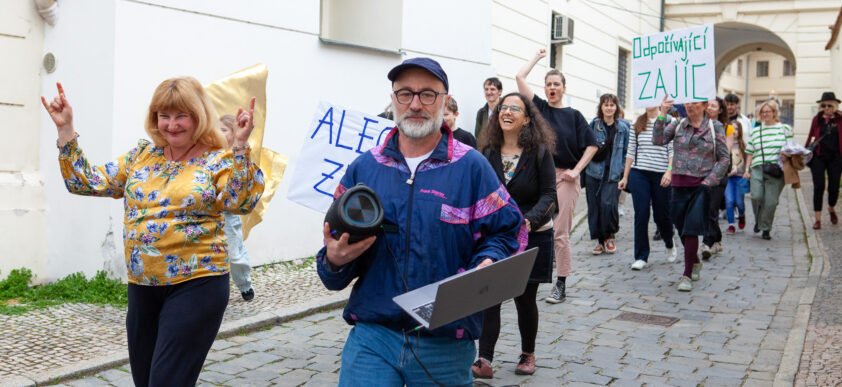
During the Prague Quadrennial 2019, SE.S.TA and GHMP invited poets and choreographers to critically engage with the legacy of Karel Hynek Mácha. The performances took place in public space near Myslbek's statue on Petřín and interacted with the audience and passers-by present.

On the 19th-century collections at the National Gallery

Cultural stereotypes – this time gender stereotypes – were also the main theme of the 2020/2021 edition led by American choreographer Sue Schroeder, who, together with the Core Dance company and young Czech choreographers, reflected on the National Gallery's 19th-century collection, with the creative process taking place online during the pandemic.

Gallery Without Borders during Covid

A new impulse for the project in 2020 and 2021 came from NGP director Alicja Knast and the Gallery Without Borders project, which strongly involved curators in the discussion. The joint debate mapped the points of contact between choreographic and curatorial approaches, especially in working with space and time. The elements of visual art – dynamics, line, shape, colour, value, form, texture, space and perspective – also form the pillars of choreographic work. At the same time, choreography emphasises the temporal, dynamic and movement-based aspects of perceiving a work of art. It is precisely on this debate that we now want to build.

3D printing and contemporary dance with UPM

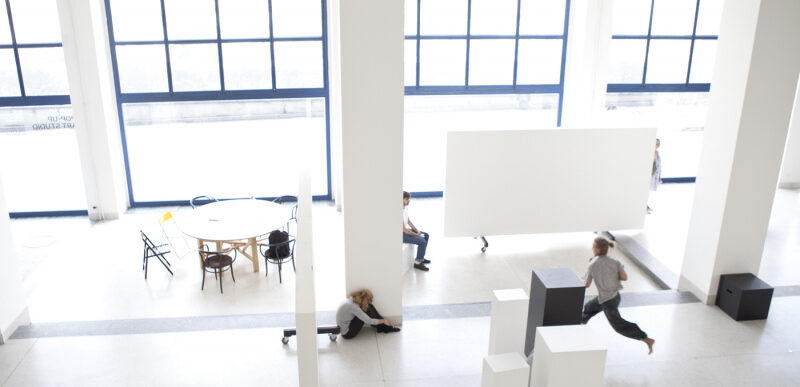
The 2022 edition was inspired by an installation of concrete barriers innovatively created using 3D printing by the ICE company from Žďár nad Sázavou, located in the hall of the Museum of Decorative Arts. This collaboration shows that the Dance in the Gallery project visionarily seeks to explore both near and distant horizons of interdisciplinarity.

Museography Choreography

In 2023, the internationally acclaimed choreographer Alice Chauchat (FR/DE), together with dancer Hana Polanská and in collaboration with curator Michal Novotný, launched research into the choreography of relationships in the National Gallery Prague exhibition 1939–2021: The End of the Black-and-White Era. In the first (research) phase, they explore the inner dynamics of this exhibition's installation and possible reflections of these principles in choreographic structures. Next year, the team will present the results of this process as a work of contemporary dance.